 ENG
 INA
Udayana University’s Faculty of Agriculture Shares Research Findings on Invasive Pests and Potential Biological Control
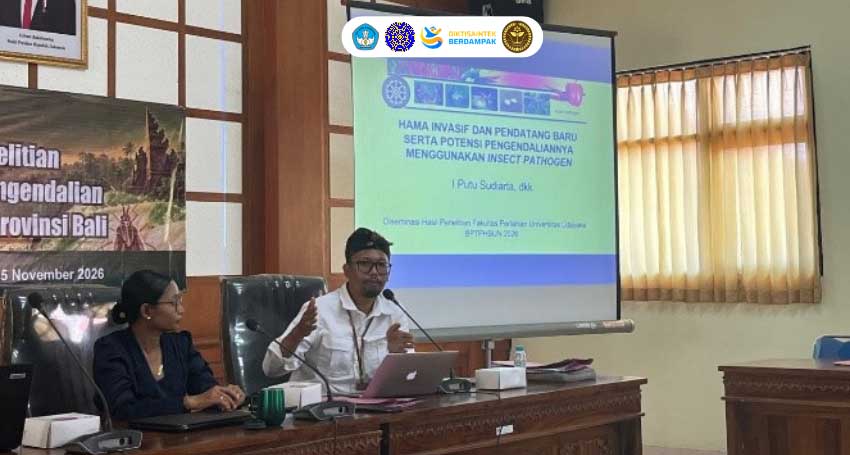
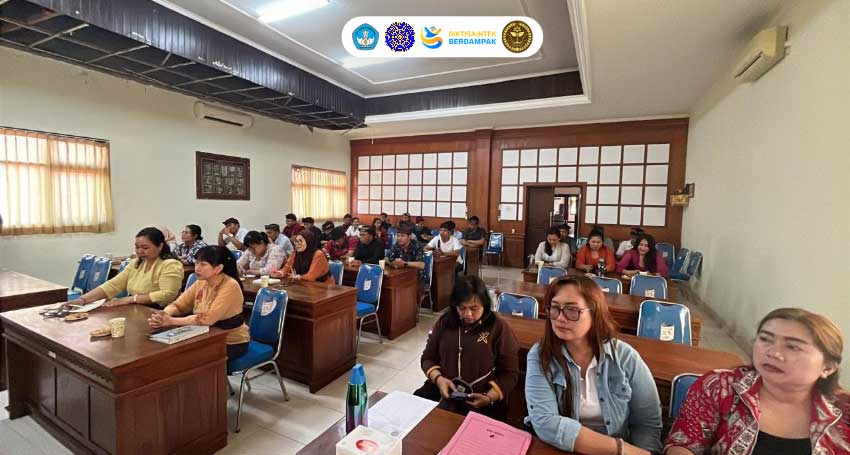
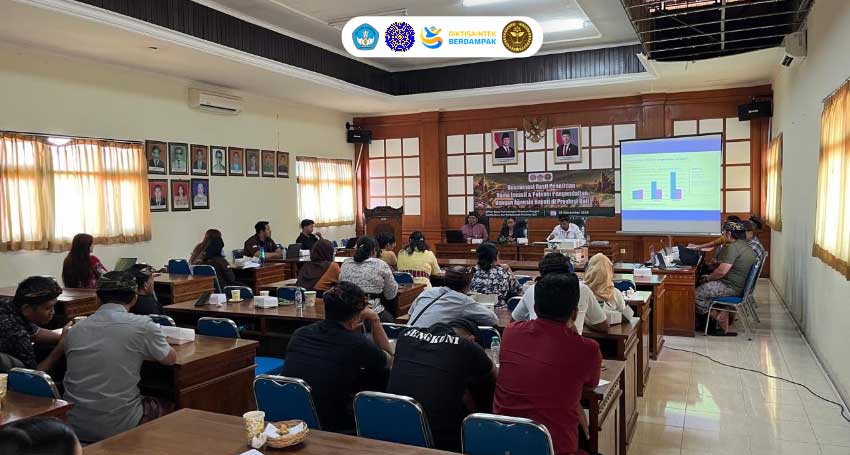
The Faculty of Agriculture at Udayana University (Unud) held a research dissemination event themed “Invasive Pests and Their Potential Control Using Biological Agents in Bali Province” on Thursday (November 5, 2026). The event took place in the meeting room of Bali Province’s Regional Technical Implementation Unit for Food Crops, Horticulture, and Plantation Crop Protection (UPTD BPTPHBUN), providing a forum for exchanging information and strengthening cooperation in plant protection.
The event was officially opened by the Head of UPTD BPTPHBUN Bali Province, Ni Putu Winaningsih, S.P., M.Agb. In her remarks, she emphasized the importance of collaboration among government agencies, universities, relevant agricultural departments, and farmer groups to support plant protection and food security.
Ni Putu Winaningsih explained that UPTD BPTPHBUN has produced and distributed biological control agents to farmers as a more environmentally friendly alternative for managing plant pests and diseases. She also highlighted the need to strengthen field officers’ competencies through education and training to ensure accurate identification, monitoring, and management.
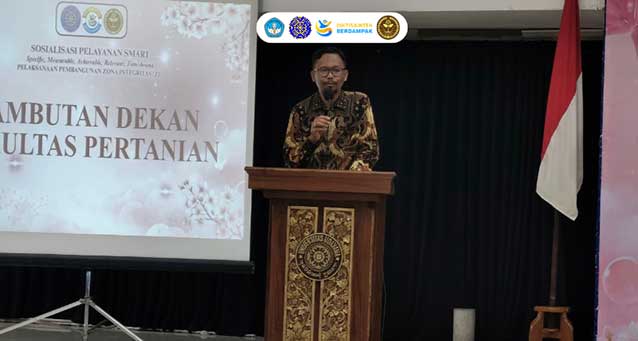
The Dean of Unud’s Faculty of Agriculture, I Putu Sudiarta, S.P., M.Si., Ph.D., expressed hope that the event would serve as a starting point for closer collaboration with UPTD BPTPHBUN Bali Province. He noted that invasive and newly introduced pests require collective attention because of their potential threat to agricultural productivity.
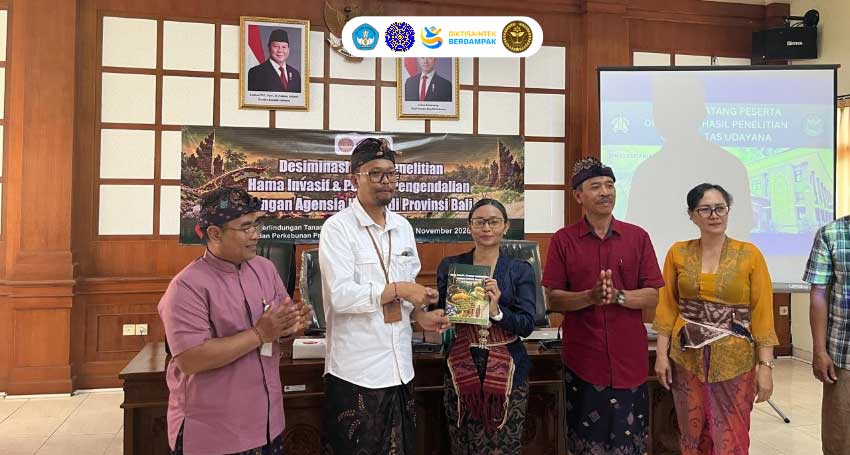
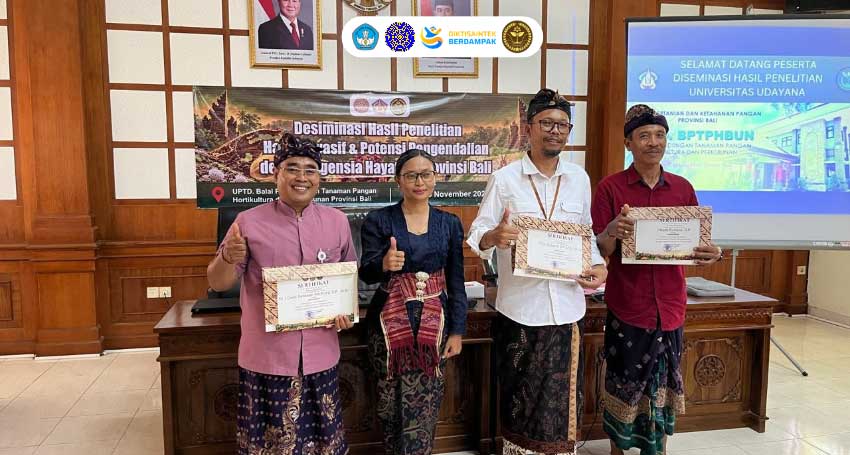
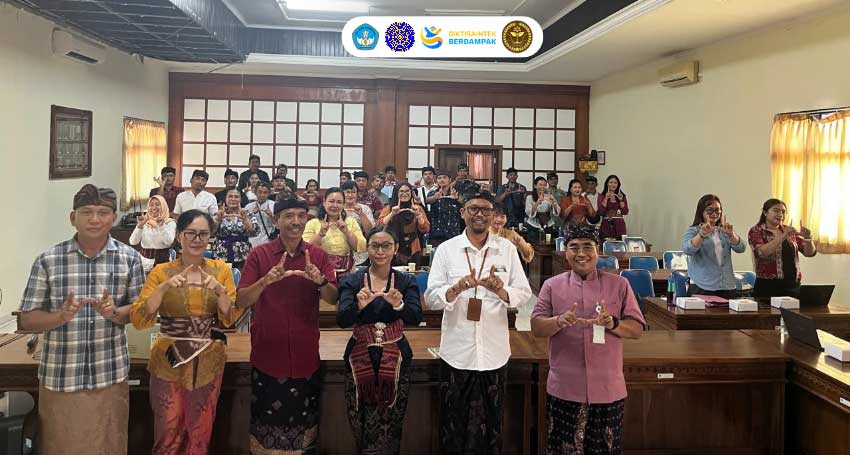
The opening session continued with the presentation of a book documenting research findings and a group photograph. The presentations were then moderated by I Wayan Wirya Kusumua, S.P., a student in Unud’s Master’s Program in Agricultural Biotechnology.
The first speaker, I Made Budiana, S.P., outlined the current pest and disease situation affecting food crops, horticultural crops, and plantation crops in Bali. He emphasized Integrated Pest Management (IPM) through continuous monitoring and a combination of control methods suited to field conditions. The approaches discussed included the use of Trichogramma sp. parasitoids and the fungi Metarhizium sp. and Trichoderma sp.
In the next session, I Putu Sudiarta discussed invasive and newly introduced pests, including the cassava lace bug (Vatiga illudens), fall armyworm (Spodoptera frugiperda), and leafminer flies (Liriomyza sp.). He stressed the importance of morphological and molecular identification to confirm pest species and guide the selection of appropriate control strategies.
The discussion also explored the potential of entomopathogenic fungi, including Metarhizium and Beauveria, as biological control agents. Their development requires exploration, identification, and pathogenicity testing against target insects to verify the capabilities of the isolates obtained.
Meanwhile, Dr. I Gede Setiawan Adi Putra, S.P., M.Si., examined the economic impacts of pest attacks on plantation crops. In a simulation involving a one-hectare coffee farm, a 30 percent decline in production, combined with price changes and increased costs, resulted in a 76.9 percent reduction in profit. The simulation highlighted the importance of considering economic feasibility when deciding on pest control measures.
The discussion session addressed the distribution of invasive pests, opportunities to explore local biological control agents, and the potential integration of pest management with Balinese local wisdom. The speakers emphasized the need for further scientific studies to assess the potential and mechanisms of the traditional practices discussed.
Through this event, Unud’s Faculty of Agriculture encouraged the application of research findings to support sustainable pest and disease management. Collaboration among academics, technical agencies, and farmers is expected to strengthen early detection and the implementation of effective control measures suited to field needs.
Gallery
UDAYANA UNIVERSITY