 ENG
 INA
Udayana University’s Faculty of Agriculture Discusses Recentralizing Agricultural Extension to Strengthen Sustainable Agriculture Policy in Bali
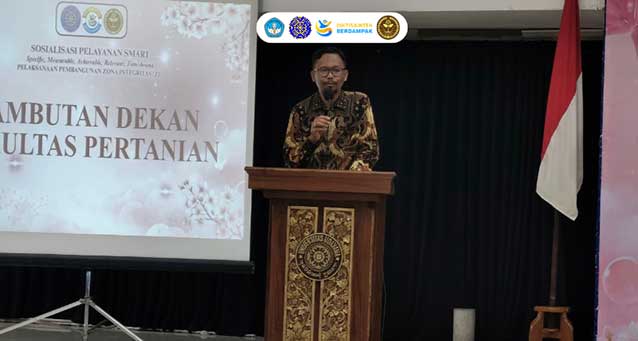
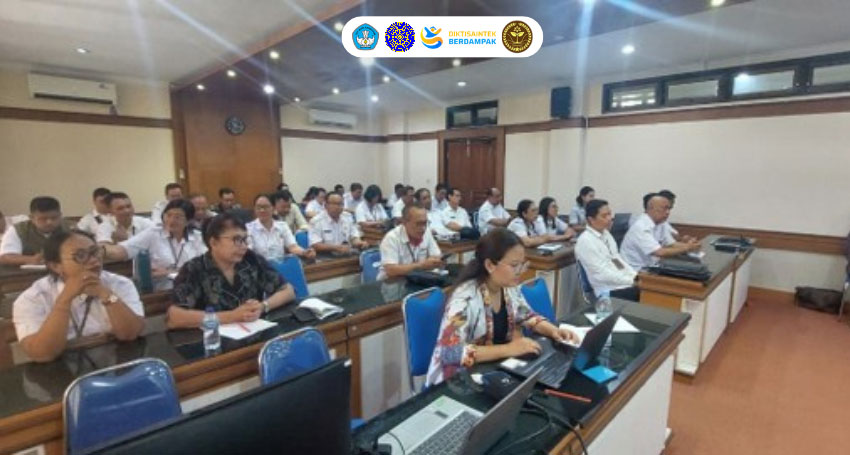
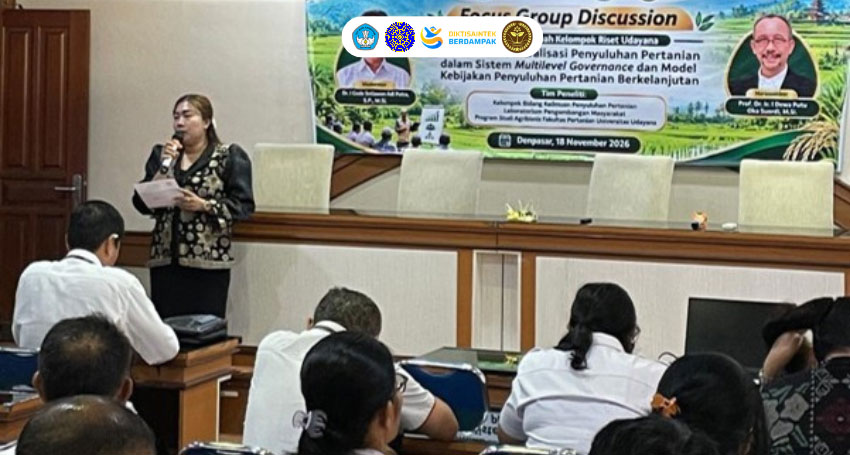
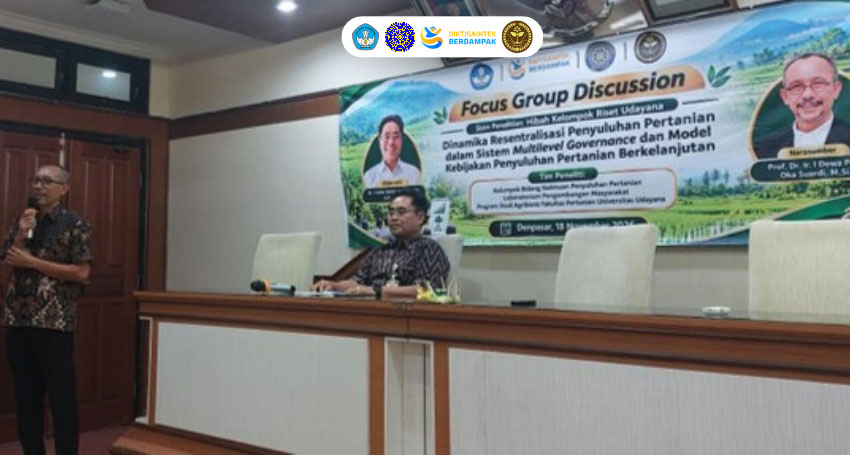
The Agricultural Extension Research Group at Udayana University’s Faculty of Agriculture (FP Unud) held a focus group discussion (FGD) titled “The Dynamics of Agricultural Extension Recentralization in a Multilevel Governance System and a Policy Model for Sustainable Agricultural Extension.” The discussion took place on Wednesday, 18 November 2026, in the Faculty Senate Meeting Room at the Agrokomplek Building, Udayana University’s Sudirman Campus, Denpasar.
The discussion brought together representatives from the Bali Provincial Office of Agriculture and Food Security, the Bali Center for the Application of Agricultural Modernization, regency and municipal agriculture offices across Bali, the Agricultural Extension Management Group, and the Agricultural Extension Working Team, along with academics from Udayana University’s Faculty of Agriculture.
Dr. Ni Luh Prima Kemala Dewi, S.P., M.Agb., Coordinator of the Agribusiness Study Program at Udayana University’s Faculty of Agriculture, opened the discussion. Prof. Dr. Ir. I Dewa Putu Oka Suardi, M.Si., served as the lead speaker, and Dr. I Gede Setiawan Adi Putra, S.P., M.Si., moderated the session. In his presentation, Prof. Oka explained that the recentralization of agricultural extension was changing how authority and resources are allocated, how extension institutions are organized, and how central and regional governments coordinate their work.
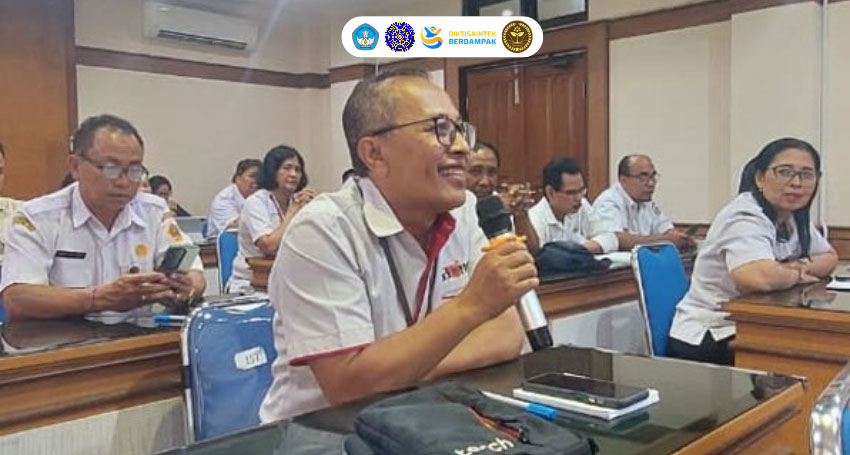
The study reported relatively high scores on three indicators: effectiveness of extension delivery (83.61%), service quality (86.37%), and environmentally friendly farming practices (84.20%). Participants identified several challenges, including a shortage of extension officers, growing administrative workloads, and gaps between central government programs and local agricultural needs. Extension representatives from across Bali called for clearer institutional arrangements, a more even distribution of extension officers, stronger coordination, and adjustments to performance indicators so officers can continue to advise and empower farmers.
Prof. Oka emphasized that sustainable agricultural extension should help farmers meet production targets, build their skills and independence, and improve their livelihoods. He also highlighted the importance of preserving local knowledge and taking economic, social, and environmental considerations into account.
Stakeholder input from the discussion is expected to inform recommendations for a more adaptive, collaborative, and sustainable agricultural extension policy model. The discussion also reinforces the Faculty of Agriculture’s role in shaping agricultural policy and supporting sustainable agricultural development in Bali.
Gallery
UDAYANA UNIVERSITY