 ENG
ENG
 INA
INA
Udayana University’s Faculty of Agriculture Hosts “Udayana Memanen 2026”

Denpasar, September 11, 2026 — Udayana University’s Faculty of Agriculture held “Udayana Memanen” to commemorate the Faculty’s 59th anniversary and the 48th anniversary of the Faculty of Agriculture Family Association (BKFP). The event took place at the Faculty of Agriculture Experimental Farm (KPFP) in Pegok, Sesetan, Denpasar, on Friday (September 11, 2026).
The event was attended by Udayana University Rector Prof. Ir. I Ketut Sudarsana, S.T., Ph.D.; Dean of the Faculty of Agriculture I Putu Sudiarta, S.P., M.Si., Ph.D.; university and faculty leaders; lecturers; administrative staff; students; and agricultural partners and stakeholders.
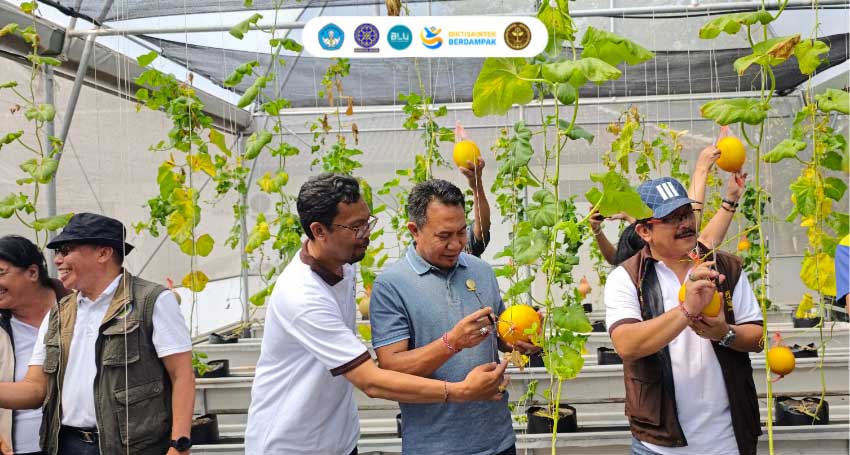
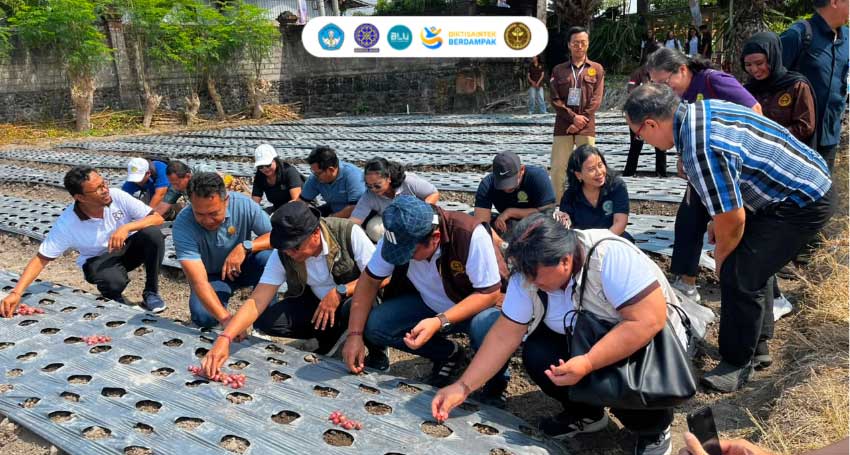
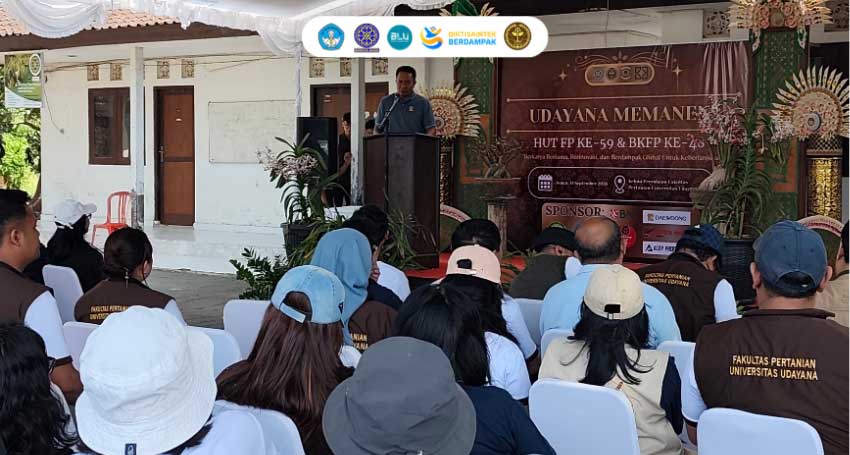
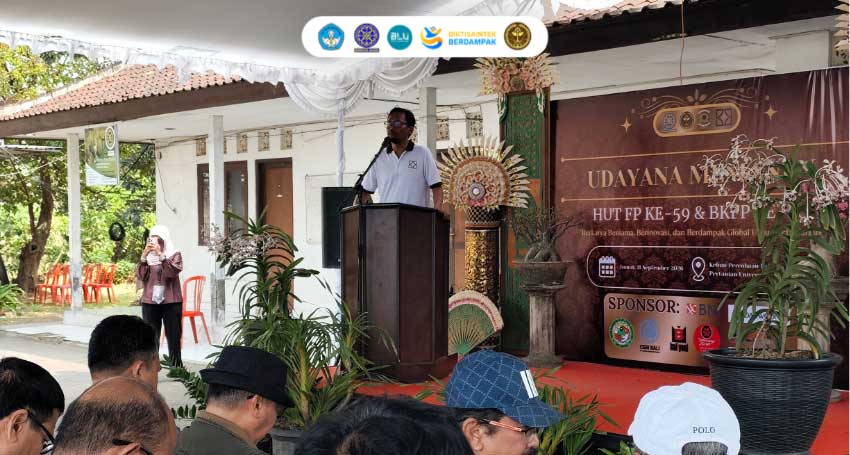
The program began with participant registration and an opening session, followed by remarks from the Dean and the Rector, who officially opened the event. After a group photo, participants harvested crops grown at the experimental farm, including onions, eggplants, and melons.
In his remarks, Dean I Putu Sudiarta described the experimental farm as a strategic asset with considerable potential to support education, research, community service, and the development of the Faculty’s productive activities. Its urban location also creates opportunities for innovative agricultural education programs.
According to the Dean, research by lecturers and students should not end with scientific findings or the creation of a product. It should be taken further through research translation, product packaging, business development, mentoring, production, and marketing so that its benefits reach a wider community.
The Faculty of Agriculture continues to explore partnerships aligned with the expertise of its study programs. Potential areas include training in data analysis and modeling, tissue culture, competency certification, landscape architecture, seed production, and the development of research outputs into agricultural products with economic value.
The Dean also discussed plans to strengthen the existing plant clinic, which has assisted farmers and businesses with plant-related problems. In the future, the service is expected to develop into a more comprehensive and formally established “Plant Hospital.”
The experimental farm is also being developed as a place where children can learn about agriculture through the School Garden program. Activities could include planting, tending, and harvesting crops in greenhouses and open fields. The farm would thus serve not only as a research facility but also as an agricultural education space for the community.
On this occasion, the Dean connected the harvest with a broader lesson for life and institutional development.
“In essence, we harvest what we plant. But what we plant must also be cared for properly. If we nurture and develop it with dedication, we can achieve remarkable results,” he said.
Meanwhile, Rector Prof. Ir. I Ketut Sudarsana congratulated the Faculty of Agriculture on its 59th anniversary and BKFP on its 48th anniversary. He expressed hope that the Faculty would continue to grow and offer solutions to challenges faced by society, particularly in agriculture, food, the environment, and climate change.
The Rector also emphasized the Faculty’s role in supporting Udayana University’s transformation from a Public Service Agency State University (PTN-BLU) into a Legal Entity State University (PTN-BH). He explained that the transition involves more than a change in status: it brings a new governance framework that gives the University greater flexibility to respond promptly and effectively to the needs of society and industry.
That flexibility, he said, must be put to use through innovation, partnerships, improved services, research commercialization, and the development of productive revenue sources. Every faculty and university unit was encouraged to seek collaborative opportunities, provide training and expert services, and make the most of its assets and human resources.
The Rector highlighted the importance of documenting and managing research findings and innovations at the institutional level. Udayana University, he said, should become a Center of Knowledge that communities, government, and businesses can turn to for scientific information and solutions.
According to the Rector, research should do more than produce publications or products. It should create meaningful impact and address identifiable problems. He also encouraged academics to pay attention to the practical challenges farmers and communities face.
“We have strong human resources. The University’s greatest assets are our intellectual capabilities and knowledge. We must use them to help solve the problems faced by society,” the Rector emphasized.
Udayana University will continue to strengthen its ecosystem for research commercialization, business incubation, student entrepreneurship, university business development, and access to strategic funding. These efforts are expected to connect research with production, marketing, investment, and the sustained use of innovation.
Concluding his remarks, the Rector invited the entire Udayana University community to embrace institutional transformation with a shared spirit and commitment to working together. Collaboration among universities, government, businesses, communities, and other partners is key to increasing higher education’s contribution to regional and national development.
The event continued with communal planting and harvesting, a social gathering, and entertainment. Through “Udayana Memanen,” the Faculty of Agriculture not only celebrated another milestone but also reaffirmed its commitment to planting ideas, nurturing innovation, strengthening collaboration, and producing work that delivers tangible benefits to society.
Gallery



UDAYANA UNIVERSITY