 ENG
ENG
 INA
INA
Faculty of Agriculture and Postgraduate Program Discuss Organic Farming and Food Security at International Seminar
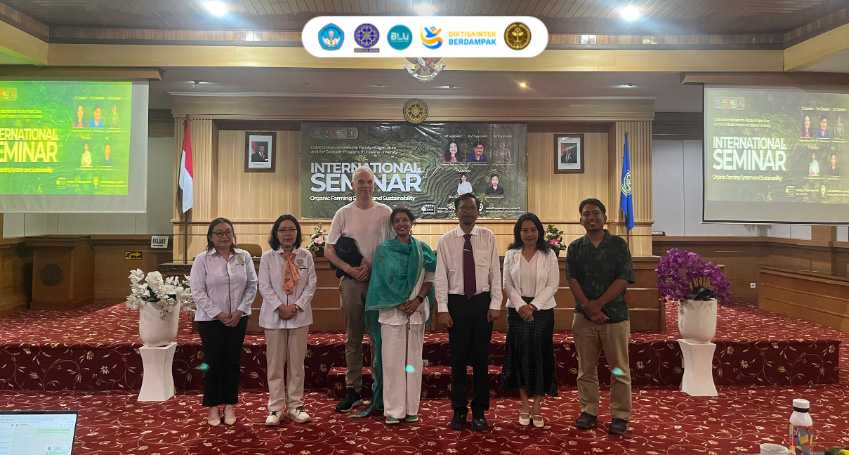
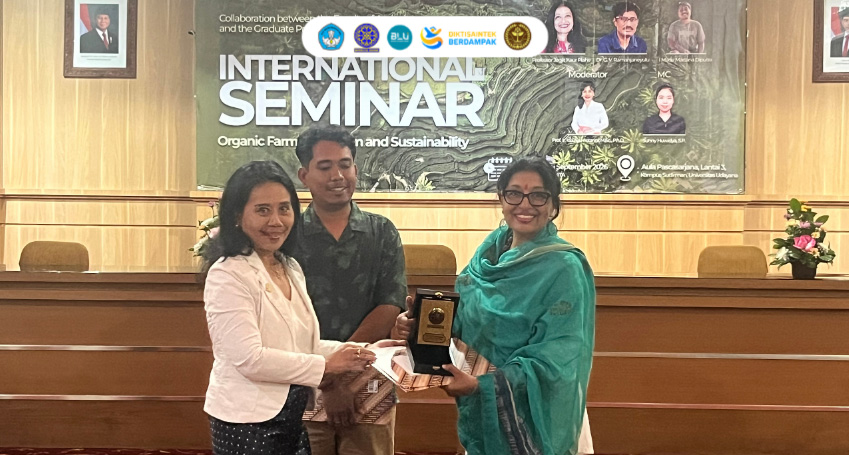
DENPASAR – The Faculty of Agriculture, Udayana University, in collaboration with the university’s Postgraduate Program, held an international seminar titled “Organic Farming System and Sustainability” on Monday, September 21, 2026. The seminar took place at the third-floor auditorium of the Postgraduate Building on the Denpasar Campus. The seminar was part of a series of events commemorating the 64th anniversary of Udayana University and the 59th anniversary of the Faculty of Agriculture. The event was officially opened by the Dean of the Faculty of Agriculture, I Putu Sudiarta, and moderated by Prof. Ir. Ida Ayu Astarini, M.Sc., Ph.D.
The seminar featured three speakers: Prof. Jagjit Kaur Plahe from Monash University, Australia; Dr. G.V. Ramanjaneyulu from the Centre for Sustainable Agriculture, India; and the Astungkara Way team from Bali.
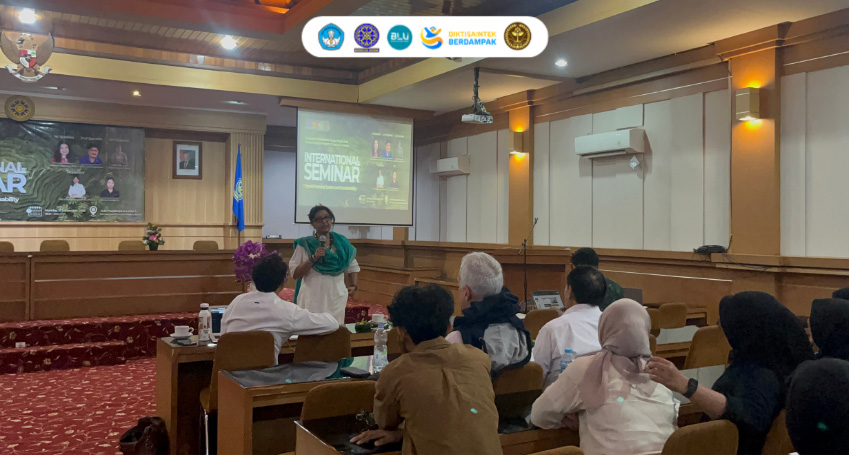
Prof. Jagjit Kaur Plahe discussed the relationship between geopolitical risks, energy, and food security. The Russia–Ukraine conflict, disruptions to international trade routes, tensions in the Middle East, and rising energy and fertilizer prices have increased the vulnerability of the global food system. Agroecology was presented as one approach to strengthening local food systems and reducing dependence on external inputs and vulnerable global supply chains.
Dr. G.V. Ramanjaneyulu shared experiences from agroecological transitions in several regions of India. He emphasized that the transition to organic farming should be implemented gradually and supported by farmer-led extension services, community institutions, financing, affordable certification, and reliable market access.
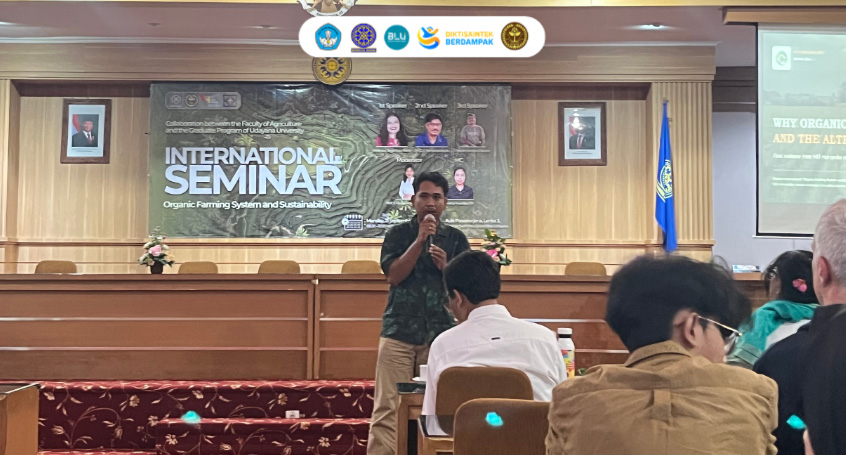
Meanwhile, Astungkara Way presented the results of regenerative rice farming practices in Bali. Monitoring conducted since 2023 has covered 945 production-cycle observations involving 232 regenerative farmers and 109 conventional farmers across nine subak irrigation communities. According to the data presented, regenerative farmers earned an average of 43 percent more profit, while reducing input costs by 39 percent.
Astungkara Way has also expanded market access through partnerships with more than 40 hotels and restaurants, which collectively purchase over 10 tons of regenerative rice each month. This assured market helps reduce the risks faced by farmers during the transition period.
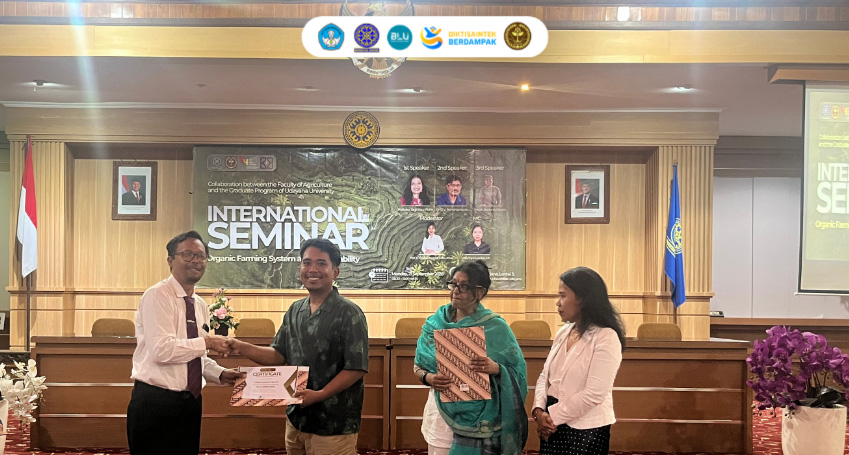
The seminar highlighted the importance of collaboration among universities, government institutions, businesses, and farming communities. The Faculty of Agriculture, Udayana University, is expected to continue contributing through research, student learning, and farmer assistance to support productive, profitable, and sustainable agricultural systems.
Gallery

UDAYANA UNIVERSITY