 ENG
ENG
 INA
INA
Anticipating Silent Dangers, Tree Health Workshop in Bali Highlights the Importance of Arboricultural Mitigation
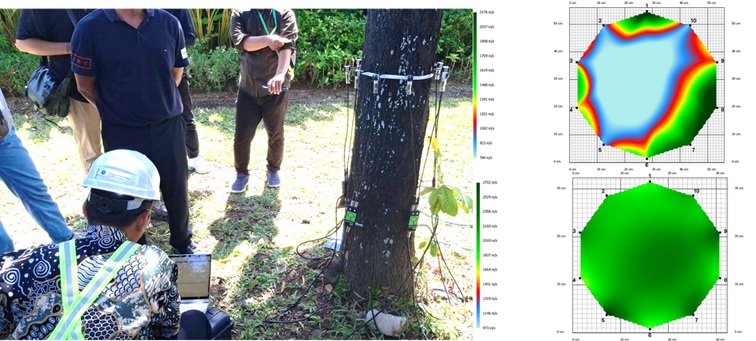
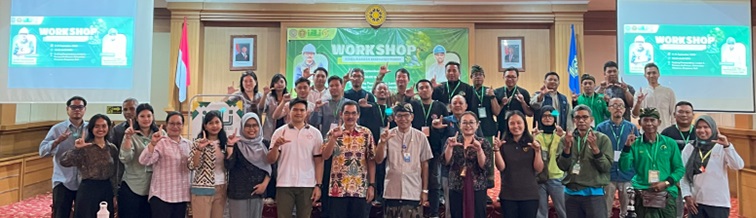
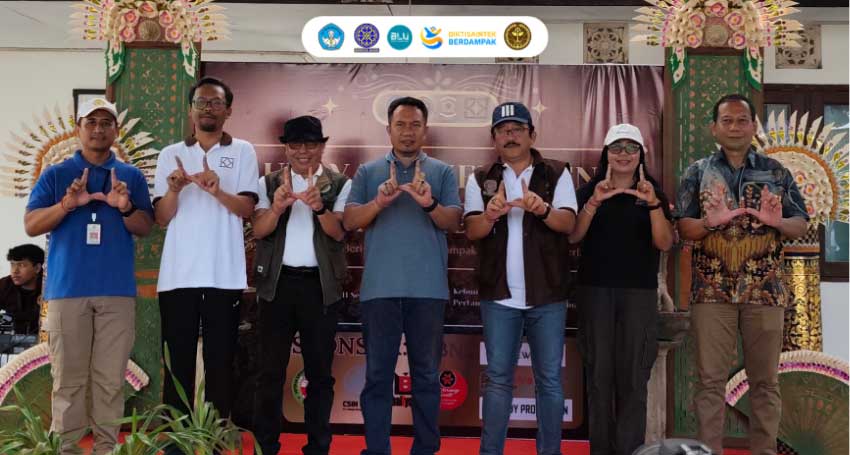
Denpasar—The threat of fallen trees lurking in urban public spaces is a critical issue requiring serious attention amidst the current extreme weather. To address this challenge, the Landscape Architecture Study Program, Faculty of Agriculture, Udayana University, in collaboration with the Indonesian Landscape Architects Association (IALI) Bali, held a Tree Health Maintenance Workshop on September 11-12, 2025. The workshop, part of a series of activities to commemorate Udayana University's 63rd Anniversary, was held in the Auditorium of the Udayana University Postgraduate Building. The event, opened by the Vice Rector for Academic Affairs (Prof. Ir. I Nengah Sujaya, M.Agr.Sc., Ph.D.), was attended by 30 participants, consisting of academics, researchers, and practitioners from various government and private institutions in Denpasar and Badung Regencies.
This workshop is specifically designed to equip participants with essential skills in detecting and anticipating potential tree hazards. Trees that appear sturdy from the outside may have internal structural problems, such as brittle roots or diseases that are eating away at the trunk. Without proper inspection, these conditions can lead to catastrophic tree falls. Therefore, education about arboriculture—the science of planting, caring for, and managing trees—is crucial. This activity bridges theoretical knowledge and field practice, providing real-world solutions to problems that often go unnoticed.
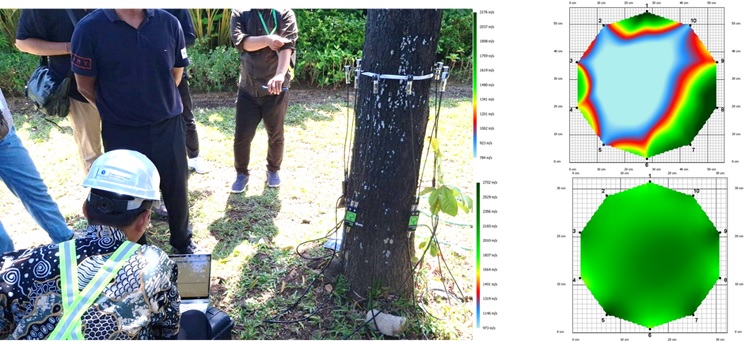
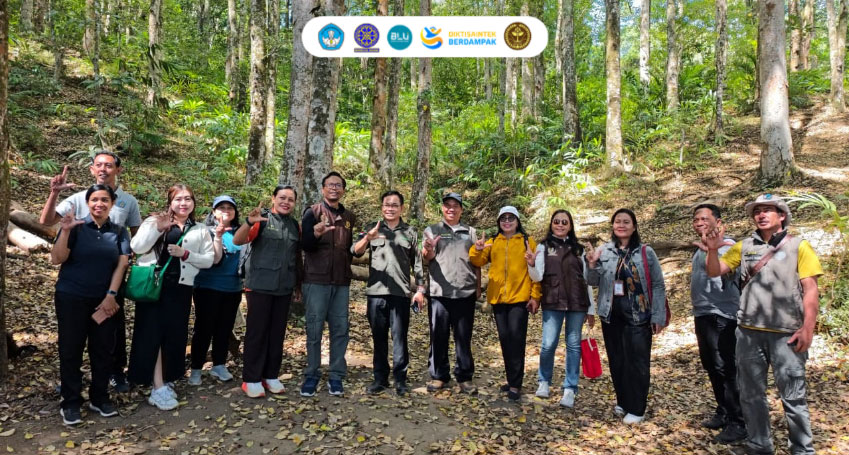
The Tree Health Maintenance Workshop invited two experts in the field of arboriculture: Ir. Rully Wijayakusuma from IALI West Java and Dr. Ir. Arief Noor Rachmadiyanto, S.P., M.P., an Associate Researcher from the National Research and Innovation Agency (BRIN). Wijayakusuma provided material and training on how to detect tree health using a manual approach, analyze it, develop recommendations, and implement mitigation measures. He trained participants to read the "language" of trees through careful visual observation. Participants were taught how to identify symptoms of disease, poor rooting, or structural defects in the trunk and branches that could indicate danger. A hands-on field workshop on campus provided participants with the opportunity to apply the material presented, directly observe the physical condition of trees, and discuss their findings. The second speaker, Dr. Ir. Arief Noor Rachmadiyanto, S.P., M.P., introduced a method for assessing tree health using digital technology. This technology allows participants to diagnose internal tree conditions that are invisible from the outside, such as hollow stems, with high precision without the need for tree cutting. This approach complements manual methods, providing objective, accurate, and detailed diagnoses, as well as solid data to inform mitigation decisions.
Through the synergy between practical and scientific knowledge, this workshop demonstrated a concrete commitment to environmental protection and public safety. The Faculty of Agriculture at Udayana University hopes that these enhanced competencies will not only be confined to the classroom but will also be implemented in the field. It is hoped that these proactive measures can be continuously strengthened so that Bali's green open spaces remain sustainable and provide protection for all its residents.
Gallery
UDAYANA UNIVERSITY