 ENG
ENG
 INA
INA
Udayana University Hosts the 2026 Eastern Region FKPTPI Workshop, Strengthening Synergy between Sustainable Agriculture and Tourism
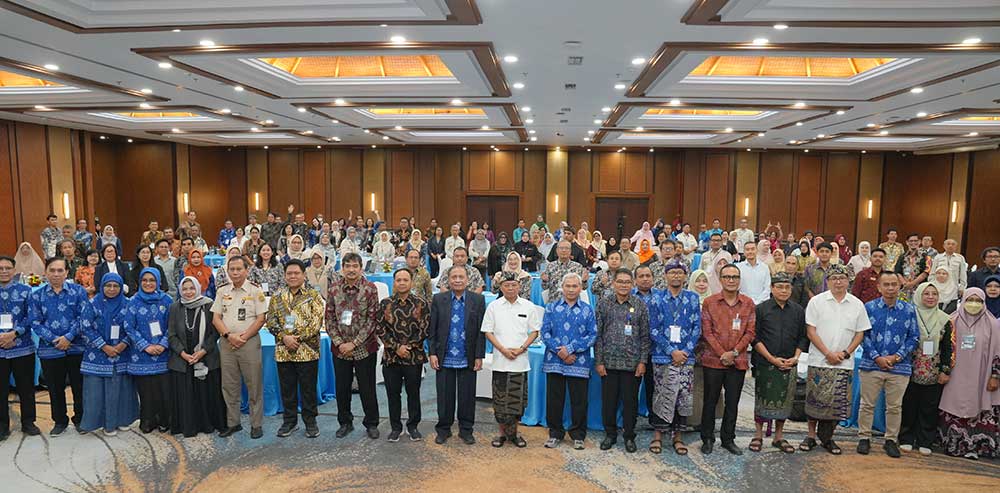
Badung, July 23, 2026 – The Faculty of Agriculture, Udayana University, hosted the 2026 Eastern Region Workshop of the Indonesian Agricultural Higher Education Communication Forum (FKPTPI). Held from July 22–24, 2026, at The Patra Bali Resort & Villas, the event carried the theme “Building Synergy to Support Sustainable Agriculture.”
The workshop brought together academics, government representatives, financial institutions, practitioners, industry players, and various agricultural stakeholders from several regions across Indonesia. The meeting served as a platform to strengthen collaboration in developing an agricultural system that is productive, competitive, inclusive, and sustainable.
One of the main agendas was a National Seminar entitled “Integrating Agriculture and Tourism to Support SDGs 1 and 17.” The seminar provided a forum for exchanging ideas on strengthening the agricultural sector through institutional collaboration, inclusive financing, protection of agricultural resources, and the development of sustainable tourism.
The opening ceremony began with a prayer, the singing of the three-stanza Indonesian National Anthem, the recitation of Pancasila, and the singing of the FKPTPI March. Participants were then welcomed with the Sekar Jagat Dance, representing Balinese hospitality and the richness of its cultural arts.
The Chair of FKPTPI Eastern Region, who also serves as Dean of the Faculty of Agriculture at Udayana University, I Putu Sudiarta, S.P., M.Si., Ph.D., presented the event report. The program continued with remarks from the Rector of Udayana University, represented by the Vice Rector of Udayana University, Prof. Ir. I Nengah Sujaya, M.Agr.Sc., Ph.D.
The 2026 FKPTPI Eastern Region Workshop was officially opened with the striking of a gong by the Governor of Bali, Dr. Ir. Wayan Koster, M.M.
In his keynote speech, the Governor of Bali emphasized the importance of integrating the agricultural and tourism sectors as part of Bali’s sustainable development. Agricultural development in Bali is guided by the local wisdom values of Sad Kerthi and the vision of Nangun Sat Kerthi Loka Bali.
This development direction includes strengthening food sovereignty, controlling the conversion of agricultural land, protecting water resources, developing organic agriculture, increasing productivity, and creating added value for agricultural products.
The integration of agriculture and tourism is expected to preserve agricultural land, increase farmers’ incomes, enrich tourism destinations based on agricultural culture, and support low-carbon development.
Various supporting policies are also directed toward protecting the Subak system, developing smart agriculture and urban farming, encouraging farmer regeneration, diversifying local food products, promoting downstream processing, and expanding market access for local Balinese products through hotels, restaurants, shopping centers, and traditional markets.
Agriculture does not merely function as a food-producing sector, but also forms an important part of Bali’s culture, landscape, tourism appeal, and future development foundation.
Four Perspectives in the Plenary Session
Following the keynote speech, the event continued with a plenary session featuring four speakers from the Bali Provincial Representative Office of Bank Indonesia, the Indonesian Quarantine Authority, Universitas Brawijaya, and Astungkara Way.
Bank Indonesia’s Support for Sustainable AgricultureA representative of the Bali Provincial Representative Office of Bank Indonesia discussed the institution’s role in supporting the development of sustainable agriculture. Bali’s economic structure remains dominated by tourism-related sectors, which account for 40.28 percent, while the agriculture, forestry, and fisheries sectors contribute 13.33 percent.
This situation highlights the importance of economic diversification through strengthening the agricultural sector as one of the drivers of Bali’s economic growth.
Bank Indonesia provides support through regional inflation control, the development of food security clusters, improved access to financing for micro, small, and medium enterprises and farmers, downstream product development, the implementation of a green economy, and transaction digitalization through QRIS.
Several challenges facing Bali’s agricultural sector were also highlighted, including weather uncertainty, an aging agricultural workforce, land conversion, commodity distribution, and fertilizer availability. Therefore, it is necessary to strengthen agricultural technology, encourage farmer regeneration, protect productive land, improve distribution efficiency, and establish an integrated fertilizer management system.
Quarantine Supervision of Agricultural Products
A speaker from the Indonesian Quarantine Authority emphasized the importance of monitoring the movement of agricultural products. Bali is one of Indonesia’s main international tourism gateways, a logistics hub for eastern Indonesia, a horticultural production center, and a region with ecosystems that must be protected.
The high mobility of people and goods may introduce quarantine plant pests that could cause economic losses, disrupt export activities, and threaten food security.
Quarantine supervision is implemented through pre-border, at-border, and post-border approaches, supported by risk-based inspections. Supervision priorities are determined based on the country or region of origin, commodity type, history of violations, and targeted pest organisms.
This approach is necessary to address increasing commodity traffic, the growth of electronic commerce, passenger baggage, small parcel shipments, smuggling methods, climate change, and the emergence of new pests.
Meanwhile, Prof. Mangku Purnomo from Universitas Brawijaya discussed the dynamics of agricultural development in Indonesia and the importance of strengthening relationships among stakeholders and agricultural business institutions.
Strengthening national food reserves, farmer cooperatives, distribution networks between farmers and industry, land and irrigation management, and coordination of authority are essential components of Indonesia’s agricultural transformation.
According to him, agricultural development strategies should distinguish between traditional agriculture and business-oriented agriculture. Traditional agriculture may be directed toward bio-organic systems and wellness tourism, while the corporate sector may focus on mass production and meeting the demands of modern markets.
The food industry must also produce high-quality products that respond to changing consumer behavior, particularly among younger generations.
Astungkara Way presented a practical perspective on efforts to connect the tourism industry with farmers and the environment. The collaboration model involves tourists, hotels, and environmental, social, and governance (ESG) programs as sources of support for farmers.
This support is provided through regular financing, farmer assistance, the maintenance of productive land, and the development of agriculture-based tourism experiences.
The collaboration is designed to produce measurable impacts, including increased farmer incomes, biodiversity conservation, improved soil quality, and better water resource management.
This approach demonstrates that tourism can provide direct benefits to farmers while creating meaningful experiences for tourists and business partners.
Following all presentations, the event continued with an interactive discussion between participants and the speakers. Various questions and perspectives were raised regarding agricultural land protection, farmers’ access to financing, human resource regeneration, agricultural product supervision, and the establishment of a fairer supply chain between the agricultural and tourism sectors.
As a gesture of appreciation, the Secretary-General of FKPTPI presented a commemorative gift to the Governor of Bali. The program then continued with a group photo session and a coffee break.
The implementation of the 2026 FKPTPI Eastern Region Workshop reaffirmed the importance of synergy among universities, government institutions, financial institutions, industry players, practitioners, and communities in building an agricultural system that is productive, competitive, and sustainable.
Through this forum, the Faculty of Agriculture, Udayana University, remains committed to playing a strategic role in developing innovation, strengthening institutional networks, and formulating collaborative solutions that improve farmers’ welfare and support sustainable development.
UDAYANA UNIVERSITY