 ENG
ENG
 INA
INA
Davis Marthin Damaledo, a Student at the Faculty of Agriculture at Udayana University, Brings Udayana's Name to the Global Stage: Discovers a New Species of Stick Insect Endemic to Sumba Island
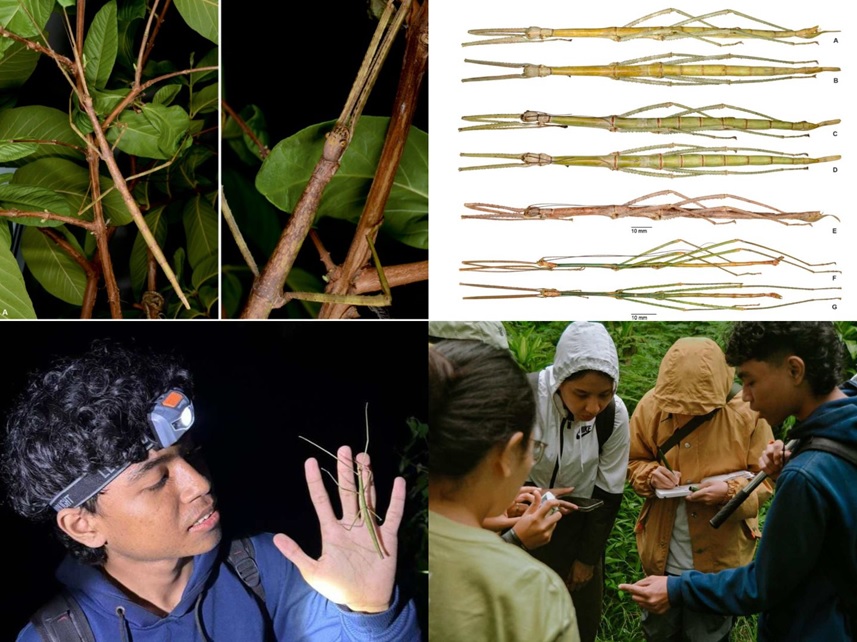
Sumba - Davis Marthin Damaledo, a student at the Faculty of Agriculture at Udayana University, has achieved an extraordinary achievement. Davis discovered a new species of stick insect from Sumba Island, East Nusa Tenggara Province. The insect is a member of the Phasmatodea order and belongs to the genus Nesiophasma Günther, 1934, which was previously revised by international researchers.
Davis, who is currently studying in the fourth semester of the Bachelor of Agroecotechnology program, has long been interested in insects. He is known as a young researcher under the guidance of his mentor, Garda Bagus Damastra, the founder of the Indonesian Mantis and Phasmid Forum (IMPF), which has approximately 3,600 members. The discovery of the Nesiophasma davisdamaledoi sp. nov. species began with a picture of a stick insect sent by Davis's uncle from Sumba. Davis's research spirit then arose to search for the insect and found it in two locations: Central Sumba Regency and East Sumba Regency.
This new species, named Nesiophasma davisdamaledoi sp. nov., is categorized as a new insect endemic to Sumba Island, and is named after Davis, its discoverer. This species is the first species of the genus Nesiophasma (Günther, 1934), the first stick insect recorded from Sumba, and the third known species of Nesiophasma from the Lesser Sunda Islands, Indonesia. This insect is characterized by its twig-like shape, measuring 13-18 cm, black spots on its genae (cheeks), and the ability to camouflage. It lives in secondary forests in Central Sumba and gardens in East Sumba. It also feeds on guava leaves and has unique reproductive abilities, both sexually and parthenogenetically, with an egg incubation period of approximately four months.
This discovery has been published in the journal Zootaxa, and the holotype has been registered and deposited at the Entomology Laboratory of the National Research and Innovation Agency (BRIN). This discovery is a breath of fresh air amidst the ongoing issue of global insect population extinction. It can enrich Indonesia's biodiversity data and demonstrates that students can also play a role in supporting conservation efforts, particularly for insects. This species is endemic to Sumba Island, making it crucial for preserving the local ecosystem. Davis hopes his footsteps will be followed by other young people interested in Indonesian biodiversity, particularly insects, which play a vital role in the ecosystem.
The Dean of the Faculty of Agriculture at Udayana University, I Putu Sudiarta, S.P., M.Si., Ph.D., expressed his appreciation for this achievement. Sudiarta called this success proof that Udayana University students have great potential in producing impactful scientific work. "Davis's name will now be etched in the scientific world. This is a source of pride for the faculty and a motivation for other students to continue their work," he said. Once again, the entire academic community of the Faculty of Agriculture, Udayana University, congratulates Davis on his discovery and hopes it will inspire other young people to pursue their passion for science. May Agriculture Prosper!
Gallery
UDAYANA UNIVERSITY